
Learn to Draw Realistic, Well-Proportioned Portraits That Actually Look Like the Person You're Drawing
A practical, step-by-step approach created specifically for hobby artists — combining observation with just the right amount of support.
See How It Works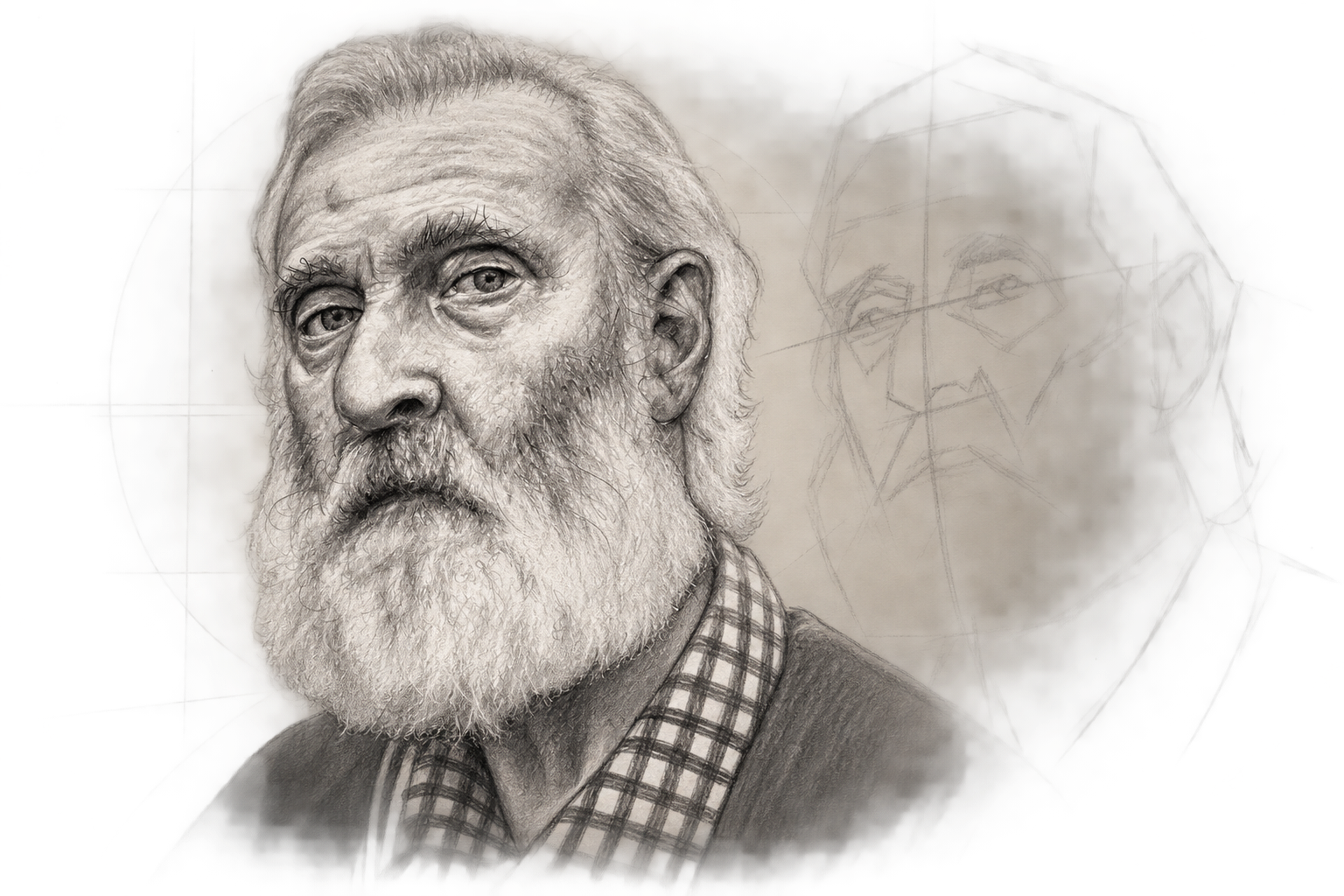
Enrollment closes this Sunday:
00
Days
00
Hours
00
Mins
00
Secs
Why I Changed the Way I Teach Portrait Drawing
Portrait Drawing Can Feel Brutally Unforgiving
Eyes don't sit naturally together. The head feels too narrow. The mouth seems out of place. Or perhaps it looks like a person… just not the person you were trying to draw.
And often you can't work out exactly where you went wrong.
---
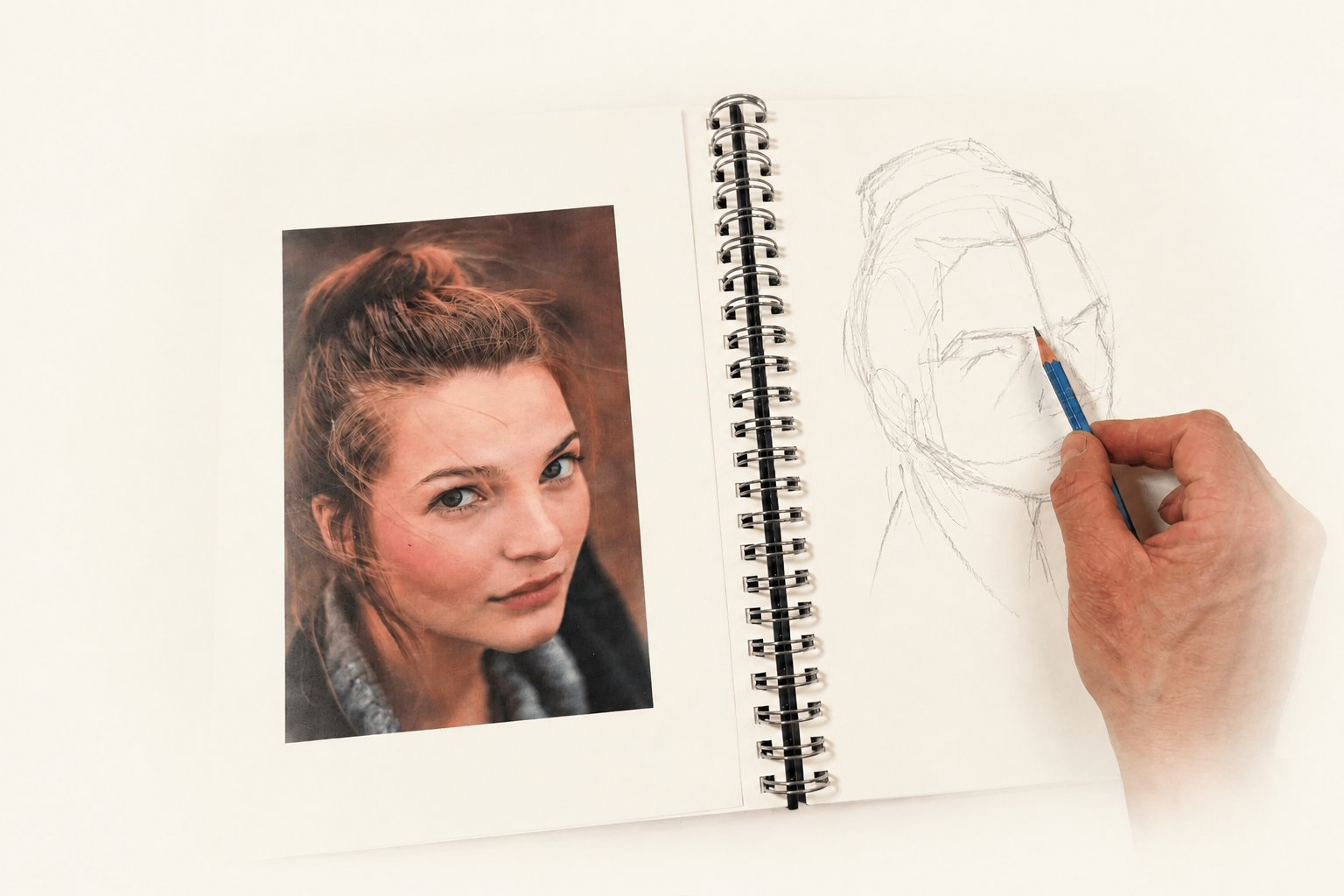
With Portraits, Tiny Mistakes Can Make an Enormous Difference...
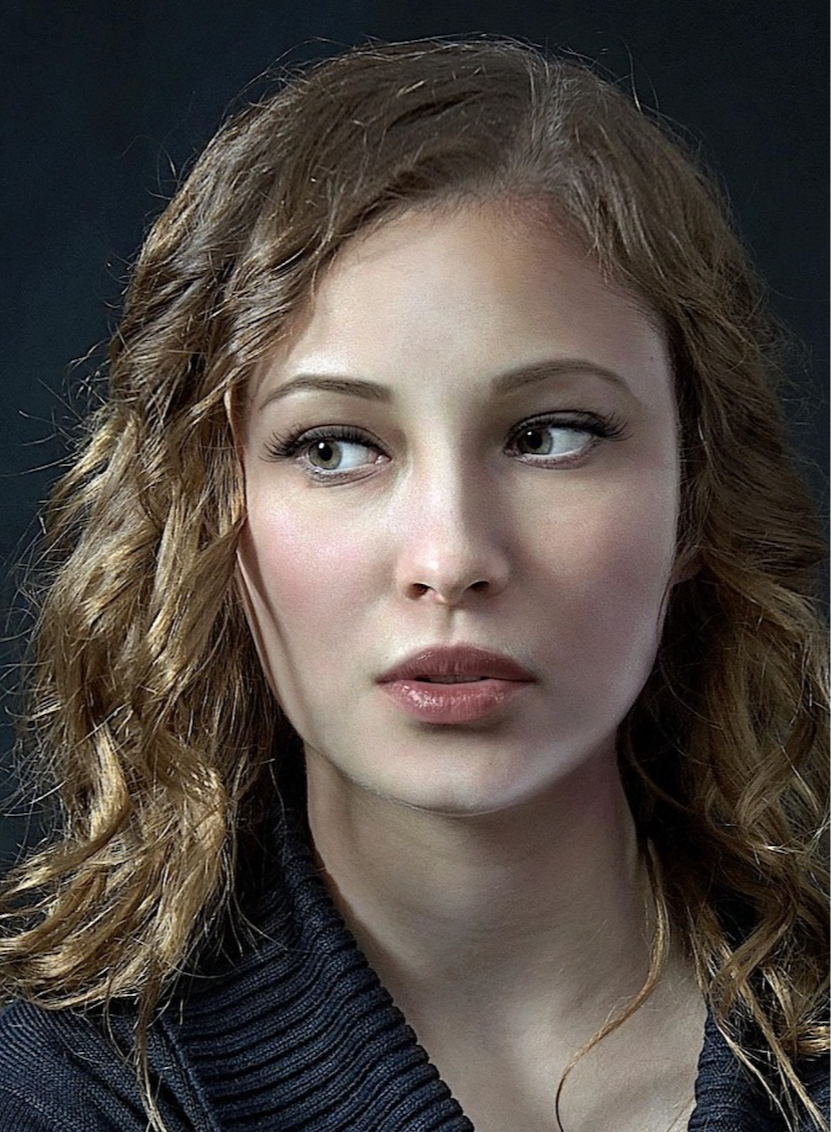
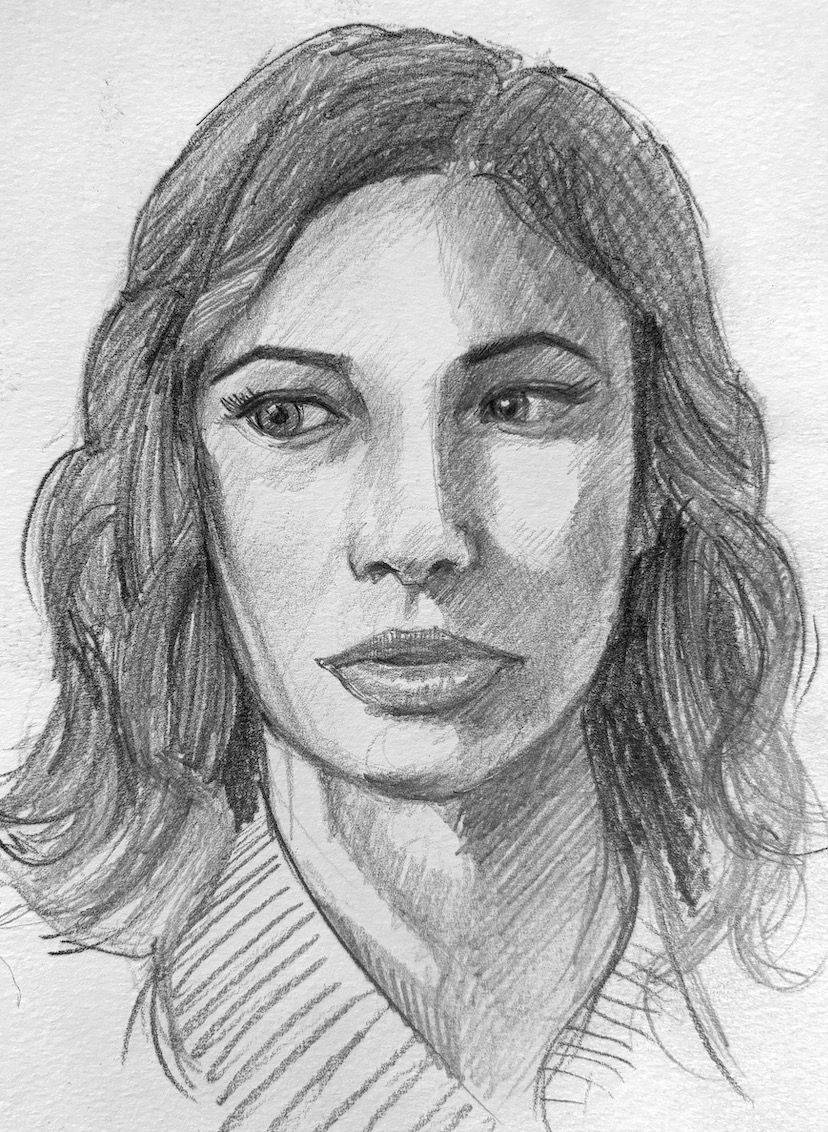
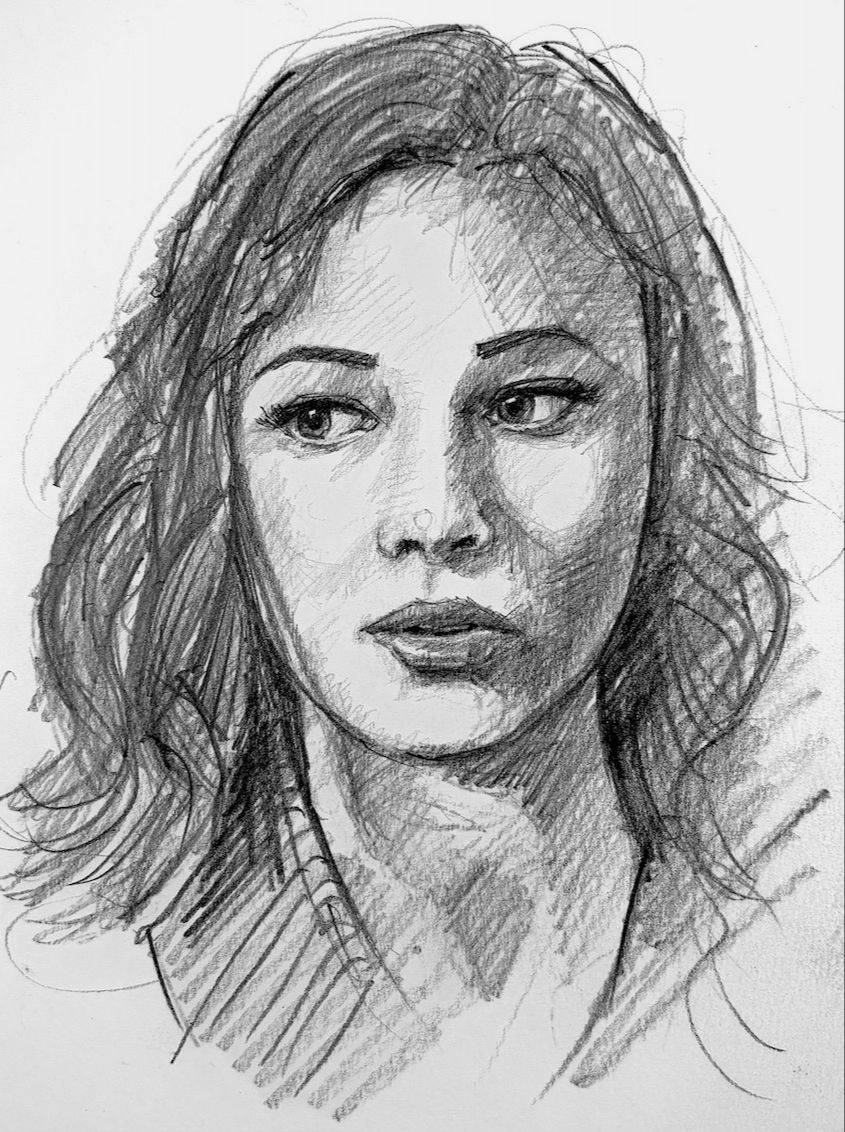
The difference between the two sketches above is a few small differences - millimeters - in the size, shape and placement of the features.
Likeness lives in those tiny differences.
“Just Draw What You See.”
It's good advice. But seeing accurately is itself a skill — and developing it to the point where you can consistently capture strong likenesses can take years of dedicated practice.
Is that really the most appropriate route for someone who draws for a hobby?
THE QUESTION THAT THIS COURSE IS BUILT UPON...
"What's the Best Way for a HOBBY ARTIST to Learn Portrait Drawing?"
Not the purest method. And not the easiest shortcut either.
But the method that gives you enough support to make success achievable — without taking away the need for skill and judgement.
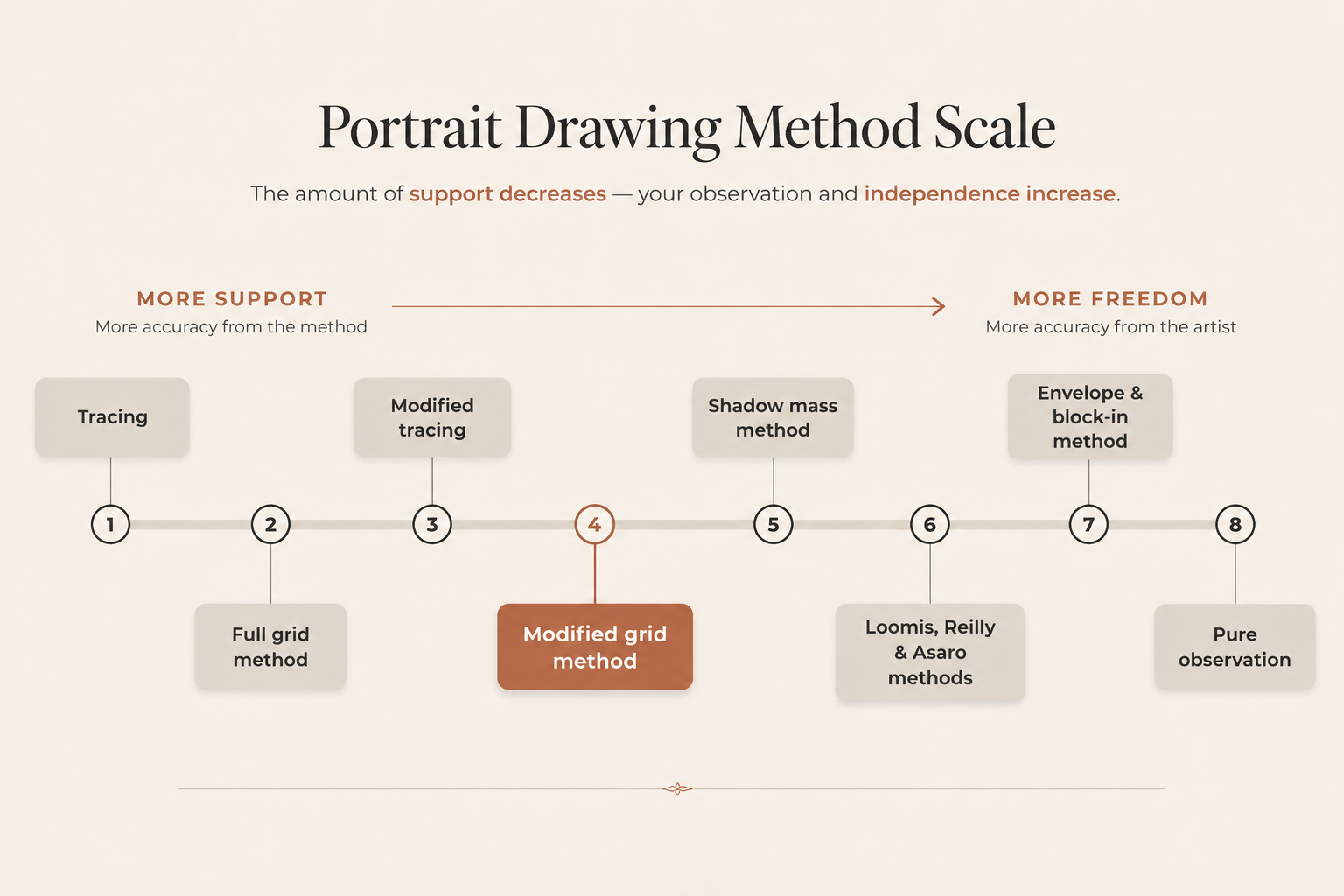
Just Enough Support. But Not Too Much.
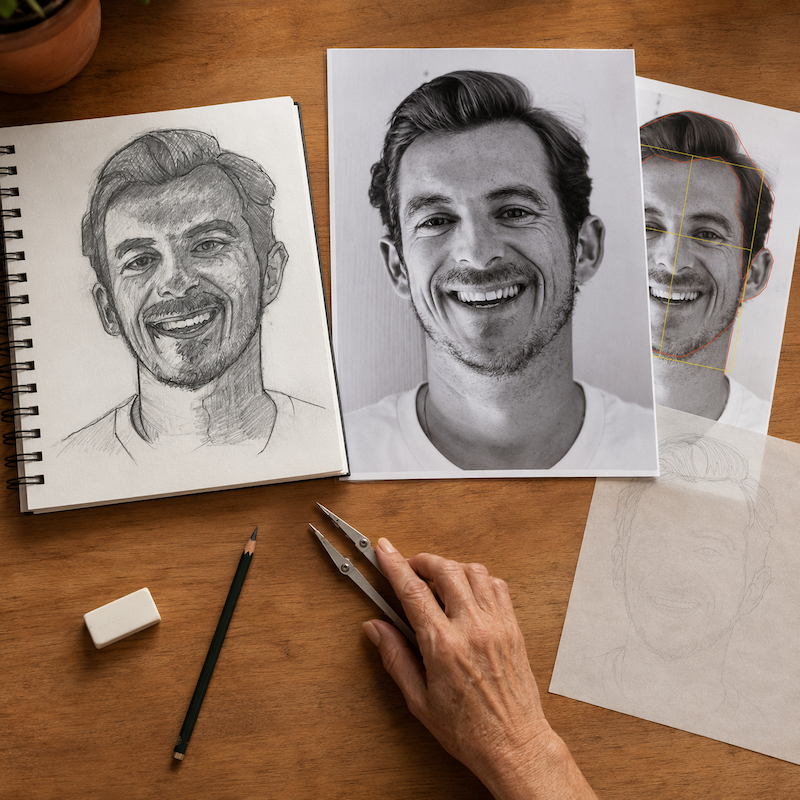
You make the observational judgement first — then check how accurate you were. This immediate feedback trains your eye to "draw what you see" whilst keeping your portrait on track.
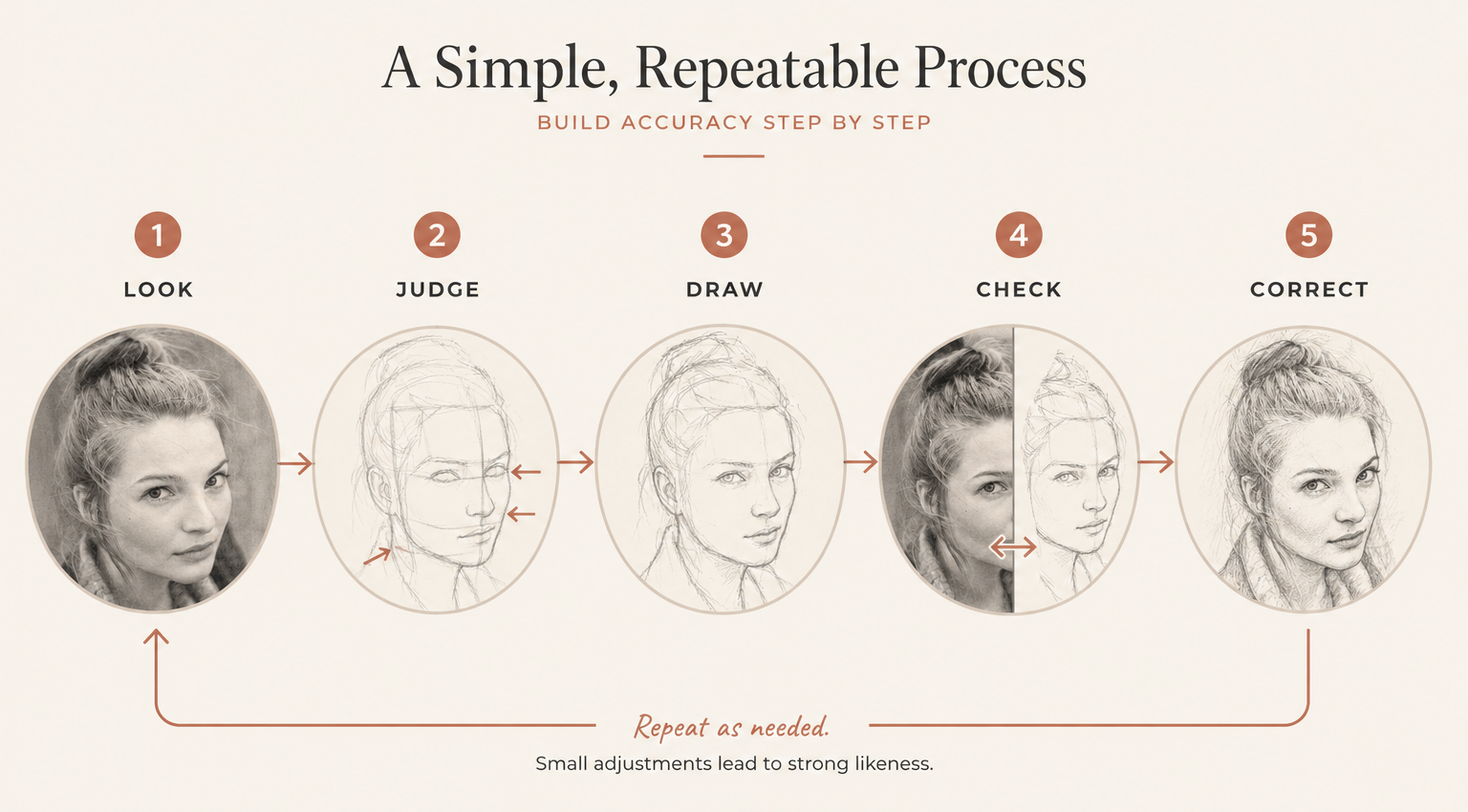
The support tool doesn't make the observation for you. It gives you feedback on the observation you've already made.
Every Check Teaches Your Eye Something
Support is NOT about taking shortcuts or "cheating" — it's about choosing what's right for you and each portrait you want to draw. As your skills grow, you can choose less support and more challenge if thats what you want.
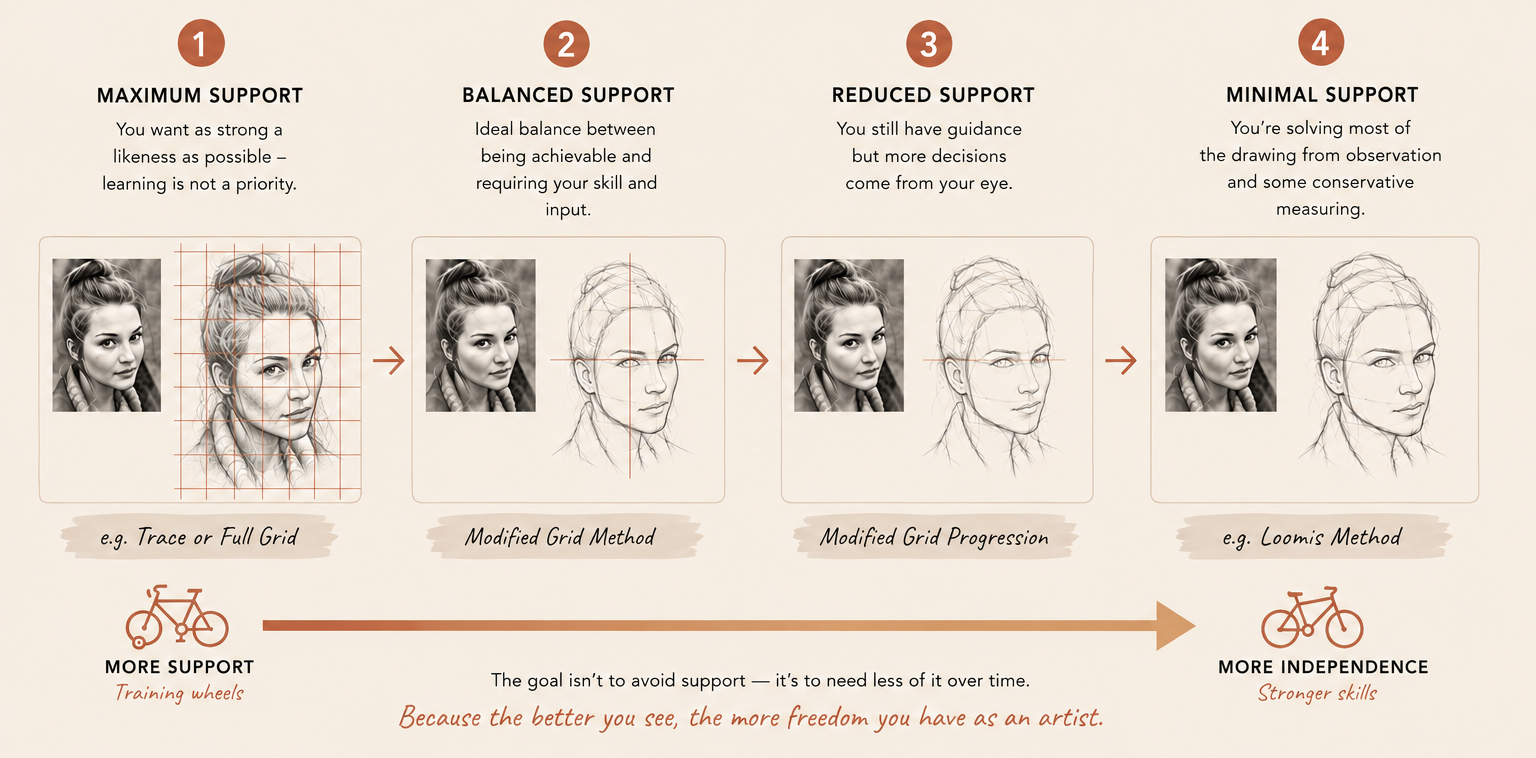
Use more support when likeness really matters. Use less supportwhen speed, freedom and spontaneity matter more.
The method should serve YOU and your goals.
INTRODUCING...
The Portrait Drawing Course
Realistic portrait Drawing for hobby artists.
A complete step-by-step program taking students from basic observation and proportion through to realistic features, shading, likeness and finished portraits.
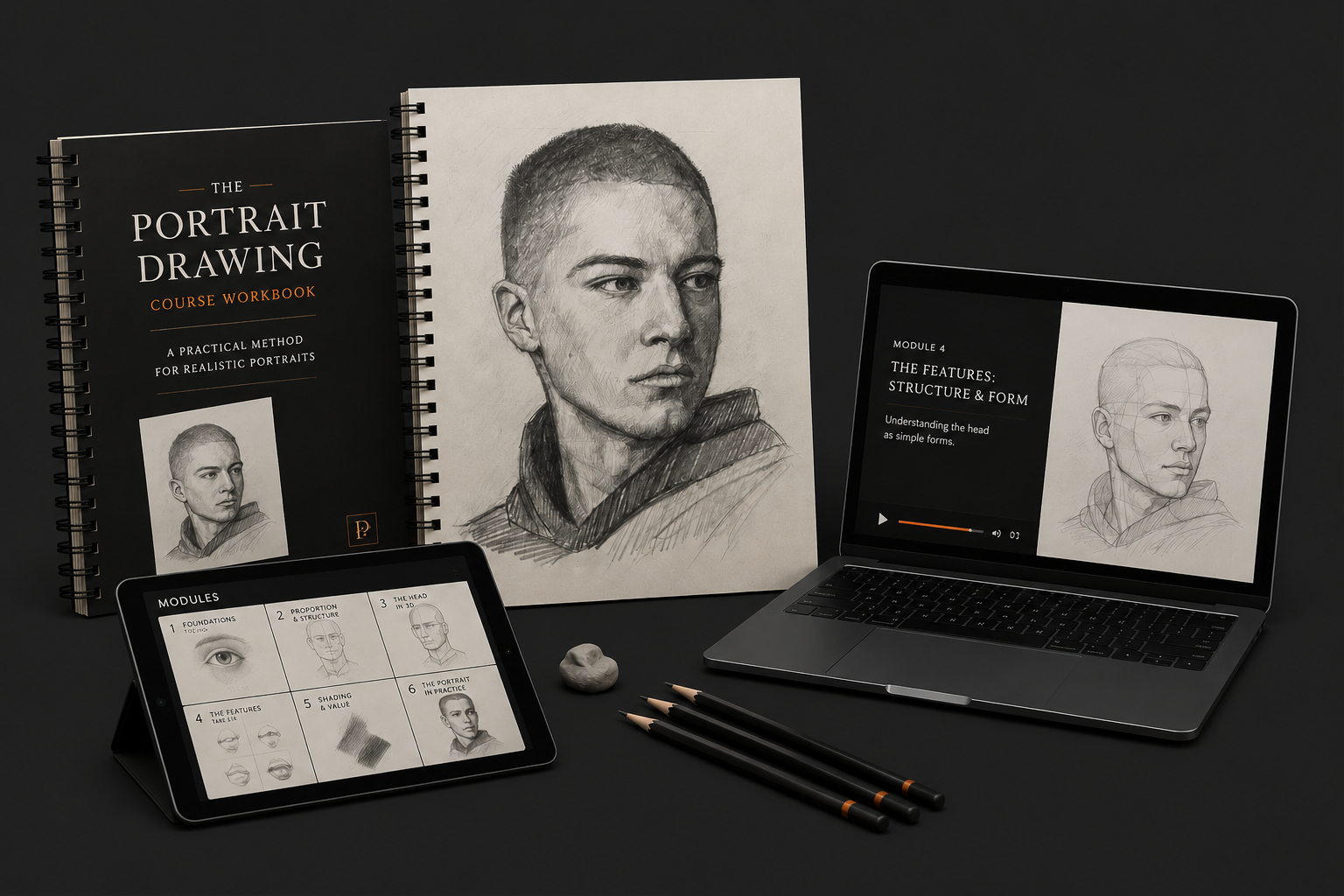
Learn to Draw Portraits That Actually Look Like the Person
By the end of the course, you'll be able to:
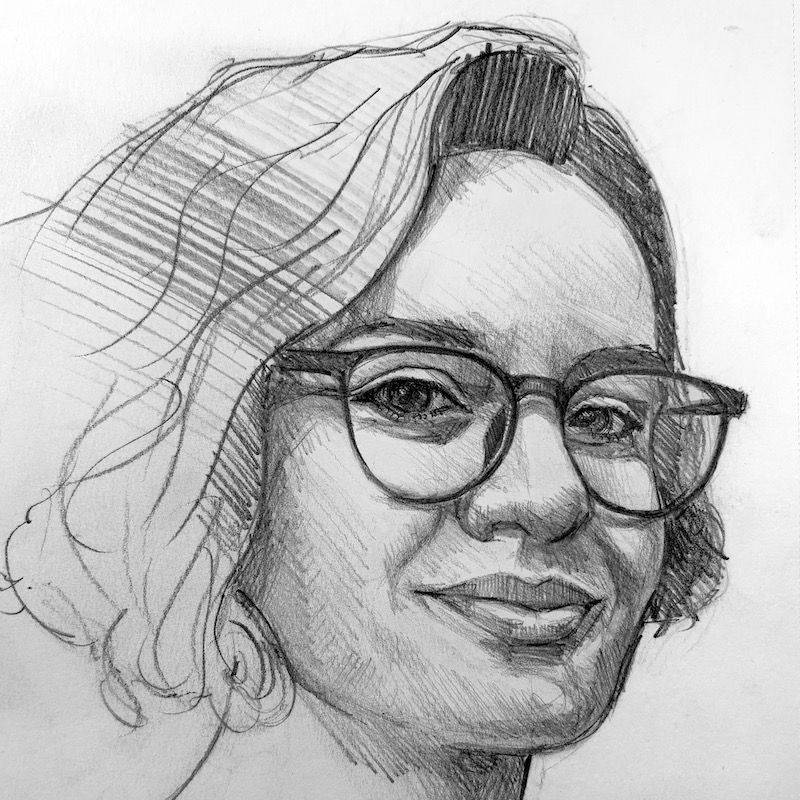
Build believable, well-proportioned heads
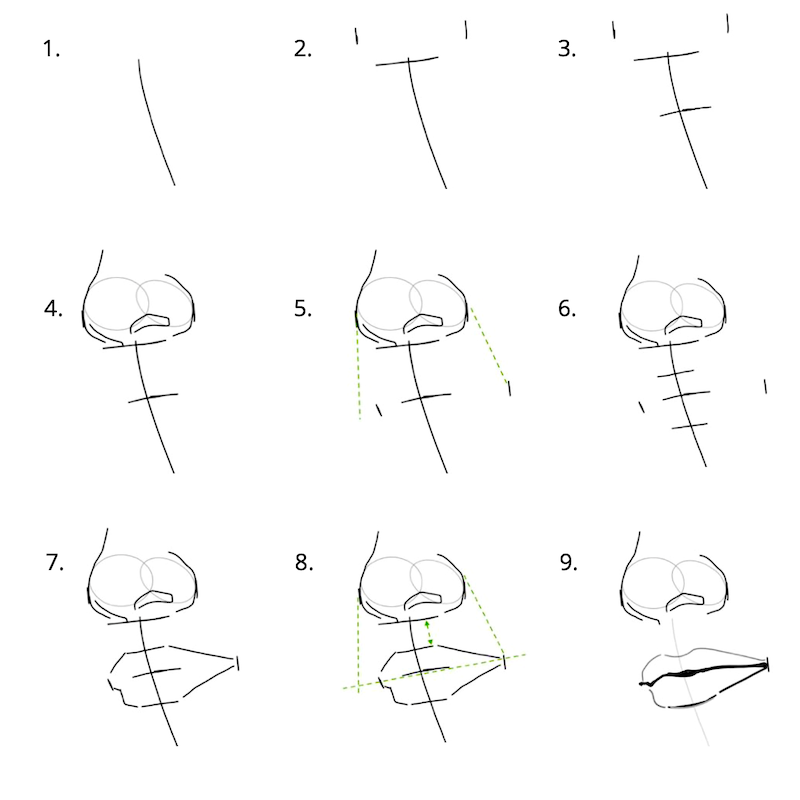
Place eyes, noses and mouths more accurately
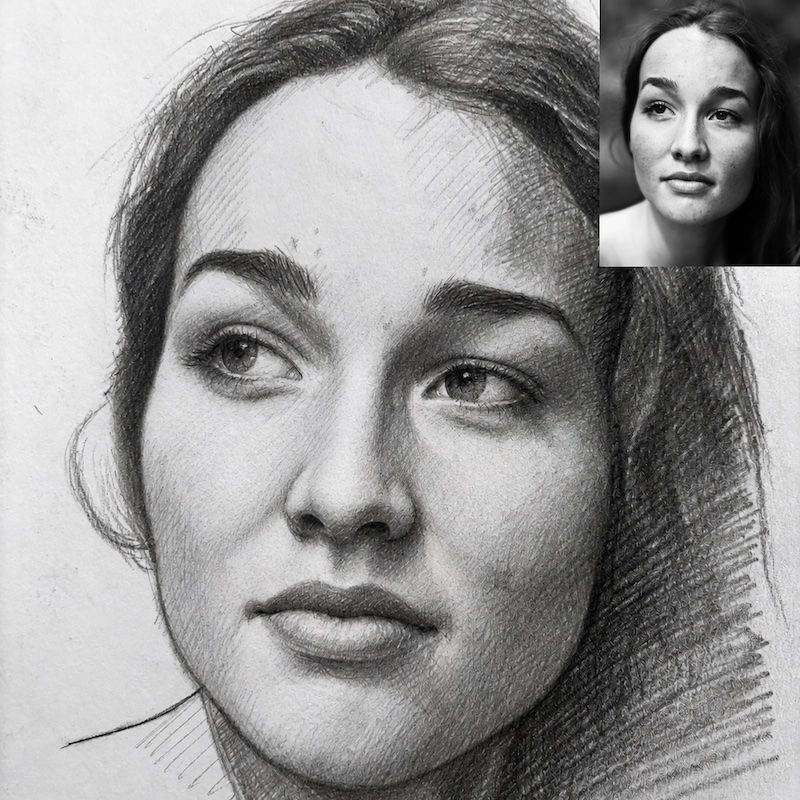
Capture strong, recognizable likenesses
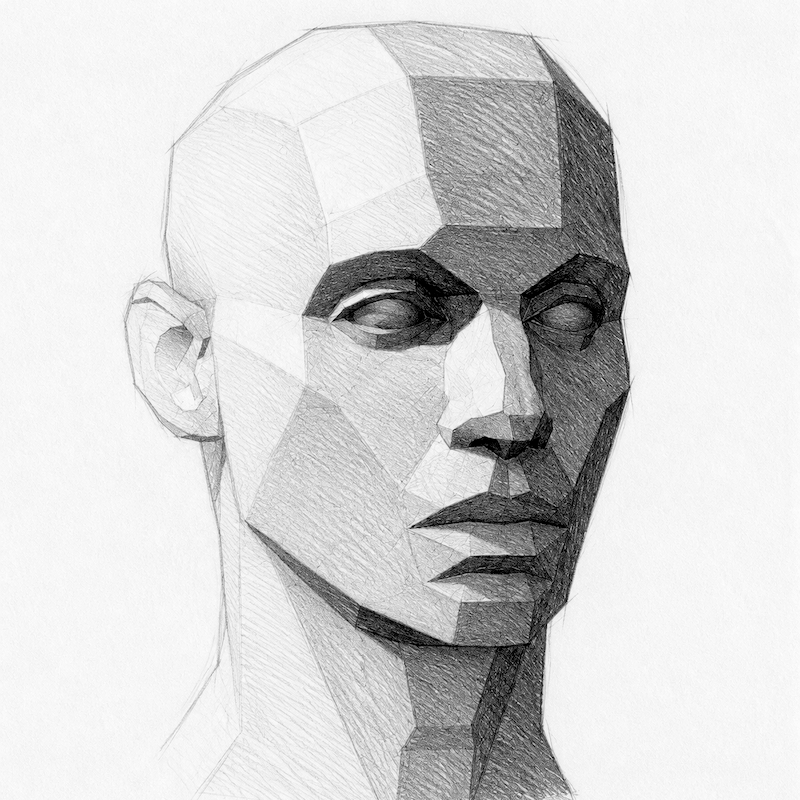
Understand facial planes and light
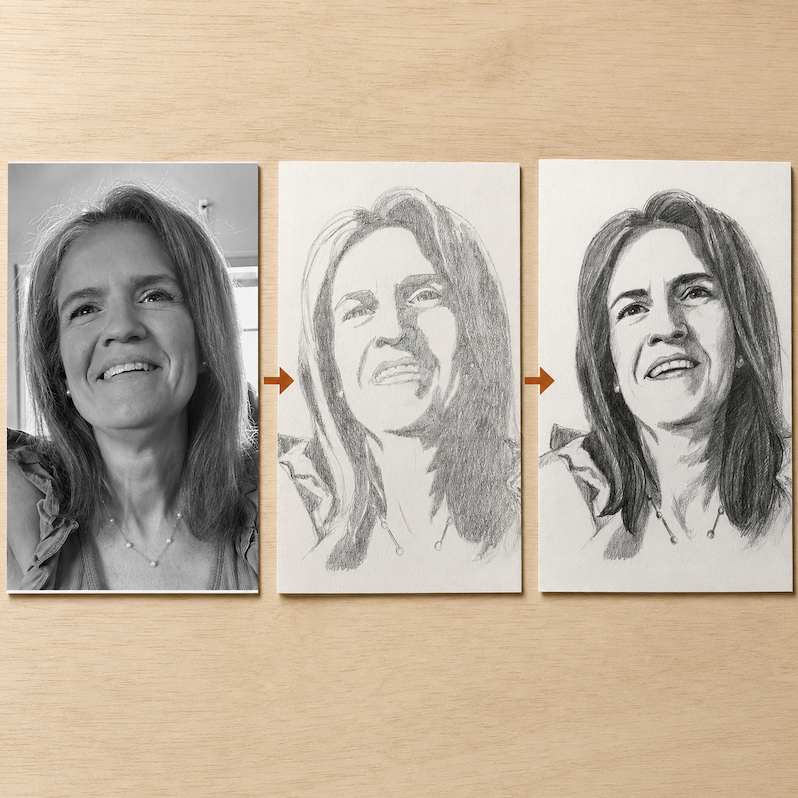
Shade your portraits with convincing form
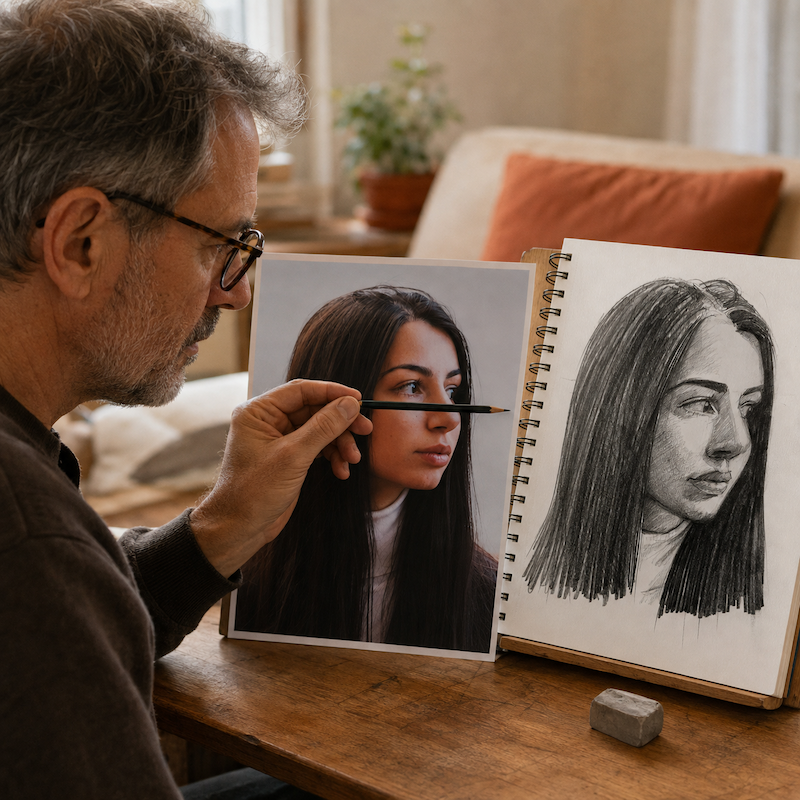
Diagnose why any portrait feels off
Choose the right method for the job
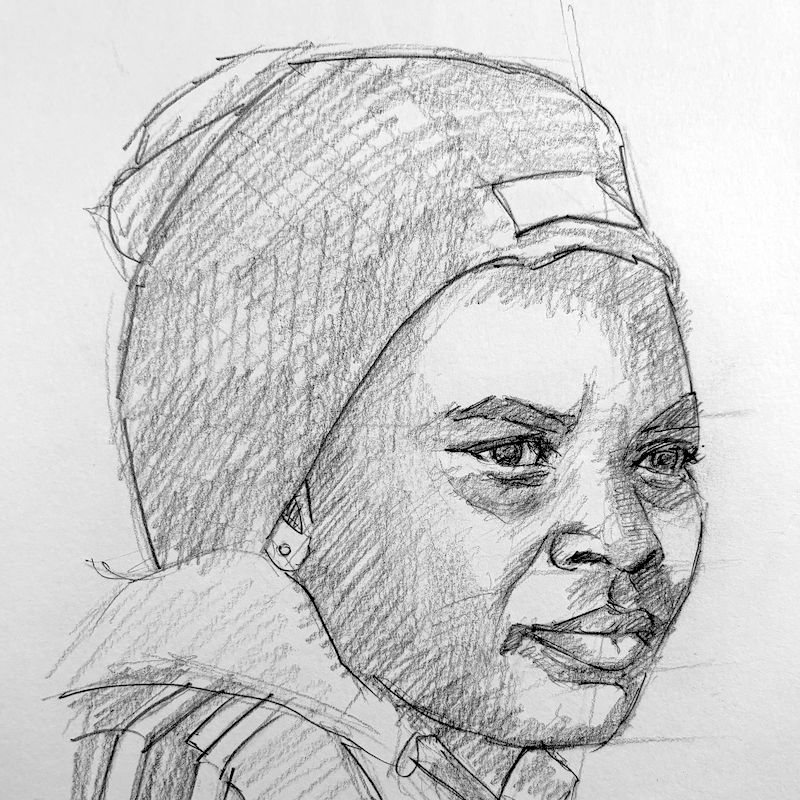
Work with less support as you grow
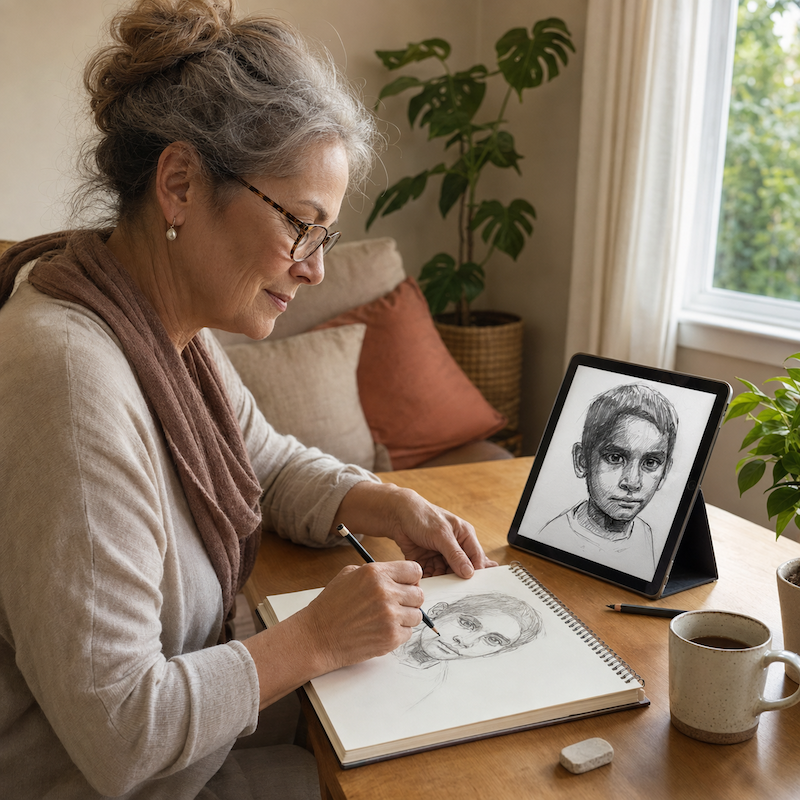
Create sustainable portrait practice
Your Step-By-Step Portrait Journey
(Click the + to expand each one and read more)
Module 1 — Set Up & Baseline Portrait
Module 2 — Seeing Like a Portrait Artist
Module 3 — The Modified Grid Method
Module 4 — How to Draw Realistic Features
Module 5 — Light, Shadow & Shading for Portraits
Module 6 — Progressing the Modified Grid
Module 7 — Sketching Portraits with the Loomis Method
Module 8 — One Portrait: Three Methods
Module 9 — Portraits After This Course
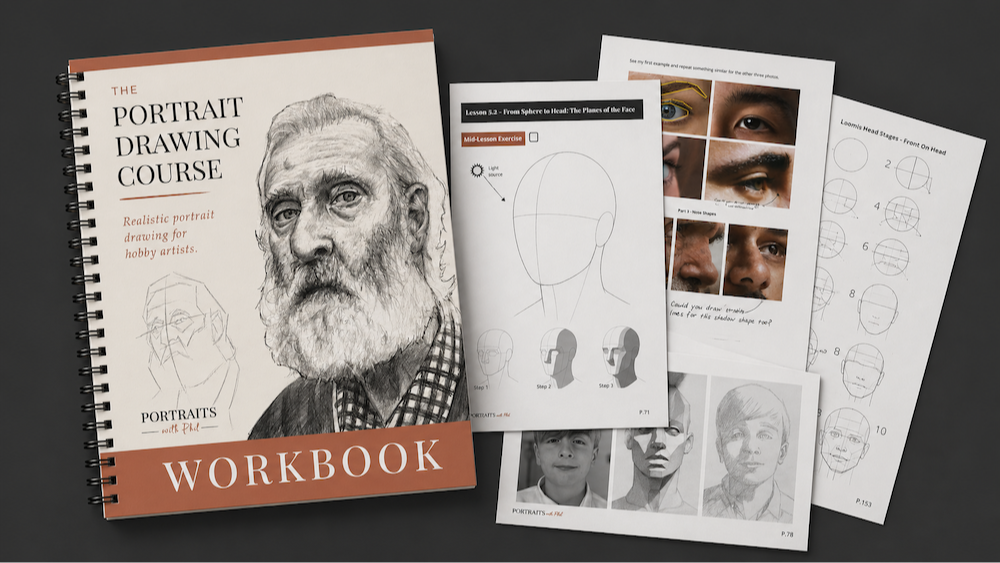
You Won't Learn Portrait Drawing By Simply Watching Me Draw
A key part of The Portrait Drawing Course is the physical workbook. Instead of worrying about downloads, printing and where to find assignments — it's all there for you. This makes it much easier to just pick up your pencil and draw!
Why I Created This Course
After teaching over 11,000 hobby artists over the last 14 years, portraits have always presented a particular challenge.
They demand accuracy. Tiny errors in the position or shape of a feature can be enough to lose the likeness.
But becoming accurate purely by eye can take years of regular practice — and most hobby artists simply don’t have hours every day to draw.
So I wanted to find a better balance....
Read More (opens a pop up)Why I Created This Course
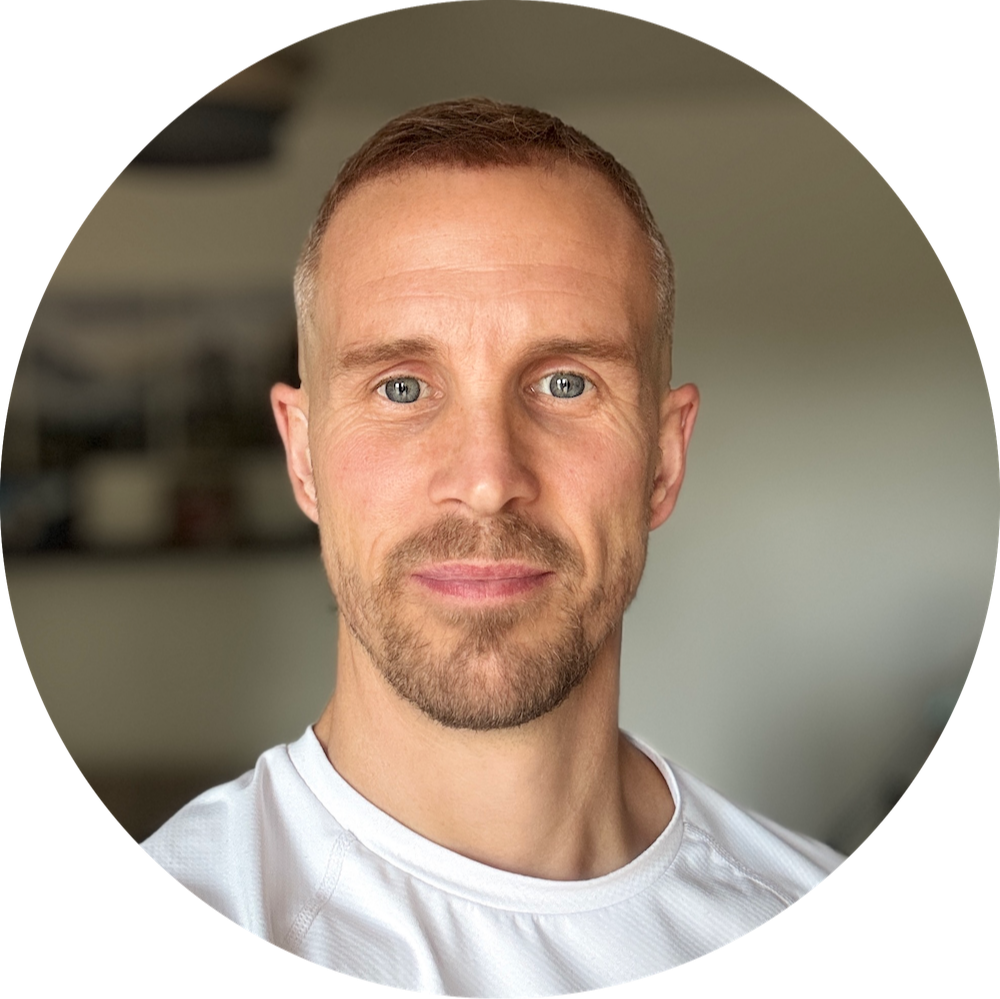
I’ve been teaching people to draw for many years, and portraits have always presented me with a bit of a dilemma.
They’re one of the subjects people most want to draw — but they’re also one of the least forgiving.
When you draw a landscape, a tree can be a little wider or a building slightly shorter and nobody will ever know. With a portrait, tiny differences matter. Move an eye slightly, make the nose a little too long or change the shape of the jaw, and suddenly the person you’re drawing doesn’t quite look like themselves.
The traditional answer is to develop your observational skills until you can judge all of those things accurately by eye.
And I absolutely believe those skills are worth developing.
The problem is the amount of time it can take.
Most of the people I teach aren't aspiring professional portrait artists who can spend several hours a day drawing. They're hobby artists. They might get a few hours at the weekend, an evening here and there, or sometimes go a couple of weeks without picking up a pencil at all.
began to feel there was a gap between two extremes.
At one end were methods such as tracing and full grids, which can give you a great deal of accuracy but make many of the important decisions for you.
At the other was pure observation — enormously rewarding, but requiring a level of skill that can take years to develop consistently.
I wanted to find a sensible place somewhere in between.
A way to give you enough support that drawing a believable likeness feels achievable, while still requiring you to look, judge, make decisions and actually learn to draw.
That idea became the foundation of this course.
Rather than pretending that support is something you should avoid, we'll use it intelligently. You'll learn to observe first, make your own judgement, draw what you think you see — and then use measuring and other tools to check yourself and understand where you went wrong.
And as your eye improves, you can gradually reduce that support.
My aim isn't simply to help you produce one good portrait by following along with me.
It's to help you become a better portrait artist — while still allowing you to create drawings you're proud of along the way.
— Phil
Keep the Materials Simple. Focus on the Drawing.
You won't need an expensive collection of art materials for this course. I've deliberately kept the materials list as short and simple as possible.
When you're learning portrait drawing, the important decisions should be about proportion, observation, light, shadow and likeness — not which of twenty pencils or specialist materials to use.
Reducing unnecessary choices makes it easier to concentrate on the techniques you're learning and the marks you're putting on the paper.
All you'll need is:
- Some graphite pencils — nothing fancy
- A sketchbook
- An eraser and sharpener
- A set of inexpensive proportional dividers
That's it. A handful of simple materials, so your attention stays where it belongs: learning to draw better portraits.
Everything You Need to Follow the Process
The Portrait Drawing Course
Is For You If...
The Portrait Drawing Course
Is Not For You If...
X You want an instant, no practice shortcut
X You're seeking Atelier-like academic training
X You refuse to use any form of construction or measurement
Choose How You'd Like to Join The Portrait Drawing Course




Try the Course for 30 Days

I want you to feel confident that The Portrait Drawing Course is right for you. So you can enroll, start watching the lessons and try the course for yourself.
If within 30 days of the course start date (not the date you pay) you decide it isn't for you, simply contact us and we'll refund your course fee.
Your printed workbook is yours to keep. There's no need to package it up and send it back to us.
Questions You Might Have
When does the course start?
Do I need previous drawing experience?
Do I have to use proportional dividers?
Is the course drip fed weekly or monthly?
What if I can't keep up with the lessons?
Is your method based on grid drawing, tracing or lots of measuring?
What materials will I need?
How does the physical workbook work?
Will I have to pay extra for the workbook (or customs charges)?
Is there a money-back guarantee?
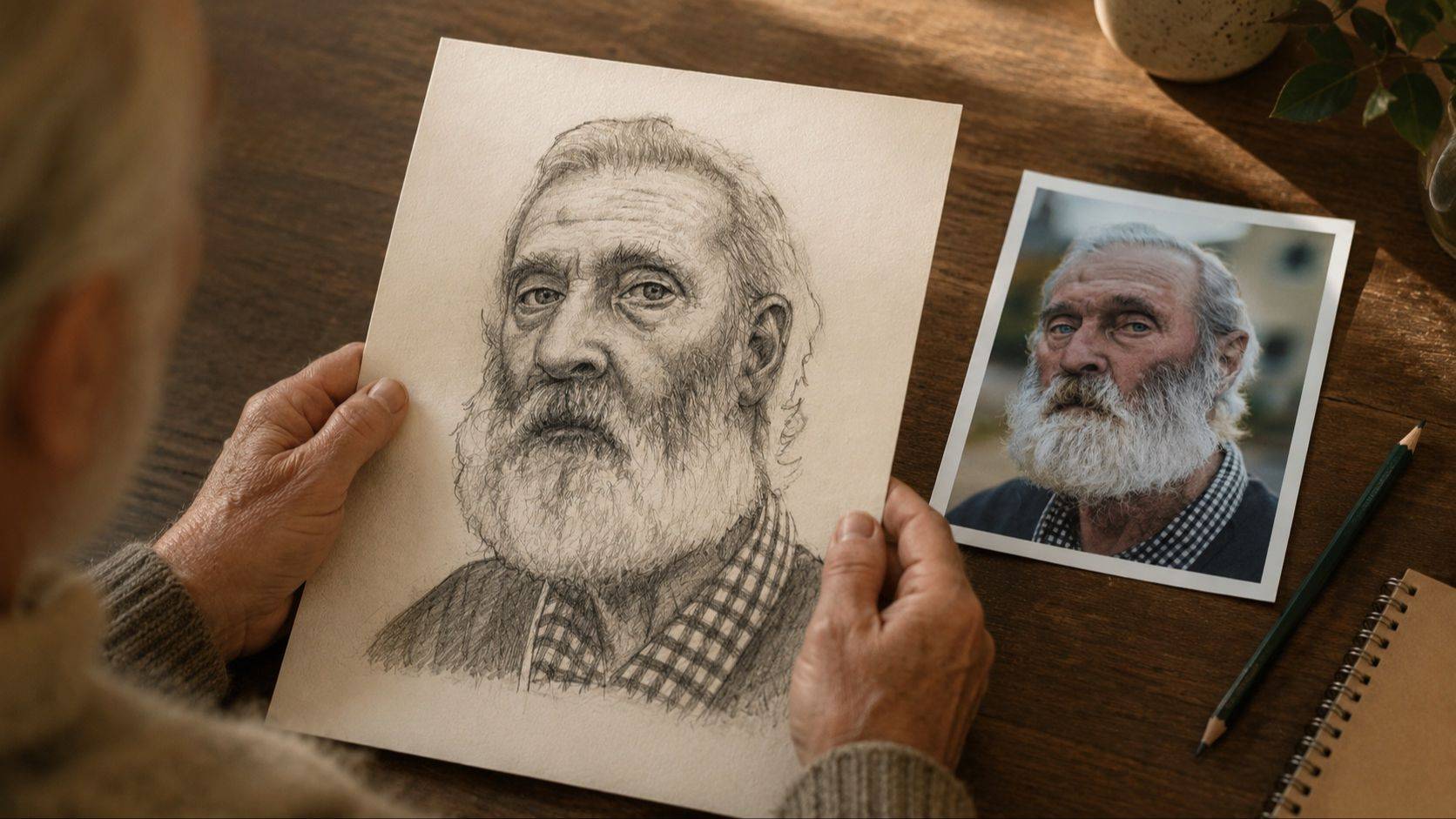
Imagine Looking at Your Next Portrait and Thinking…“Yes. That’s Them!”
There’s something special about drawing someone you care about — and capturing more than just a face.
That expression. That look in their eyes. The little things that make them unmistakably them.
Your child or grandchild. Your partner. A parent. A friend.
And when you finally put your pencil down, being able to sit back and think:
“Yes. I got them.”
That’s what I want this course to help you achieve.
Enrollment Closes Sunday 13th September
00
DAYS
00
HOURS
00
MINS
00
SECS